Brian Krebs explains how to set your Google Calendar (desktop, not moble) or Apple Calendar to avoid spam getting posted to your calendar: https://krebsonsecurity.com/2019/09/spam-in-your-calendar-heres-what-to-do/
Archive | Apple Macintosh OS X
Panther, Tiger Leopard: Apple’s OS X on iMac, PowerBook, iBook, MacBook, PowerMac and more.
Notes from Feb 25th Web Dev Meeting: Brian Cardarella on Ember.js
The Portsmouth Web Dev meetup is hosted at Alpha Loft in Portsmouth. This month there were two meetings: Ember on the 25th and Lightning talks on the 26th. On the 25th was the first, with Brian Cardarella of dockyard.com giving the main presentation on Ember.js.
Brian started with a bit of a history lesson. Ember spun off of SproutCore from Strobe. SproutCore 1.0 suffered from the slow (at the time) JavaScript runtimes and overly-complex UI widgets, resulting in a poor user experience. The 2.0 branch was started and Yehuda Katz (core contributor, Rails, jQuery and more) and Carl ??? and pushed off UI elements to focus on the core and on speed.
The run loop is the core event loop engine of Ember, and code in Ember can enqueue new items onto the loop, which continues to loop as long as there are items to be processed. There is great documentation in the Ember Guides, and a good video overview. Brian suggests that the Ember Starter Kit is just that, a good way to get started, but likely not appropriately robust for a professional application.
Enough background, we jumped into http://ember.jsbin.com/ and Brian commenced live coding in Ember to demonstrate how the Ember application essentially hooks into the body tag of the DOM and can read and write elements from there. He showed how actions could be triggered by observed changes, that setters and getters were required for property manipulation.
Ember has its own form of MVC (doesn’t everything?) where Models are business rules containers, and Controllers are contexts in which your interactions with models occurs, essentially acting as proxies. Views are nearly becoming deprecated as their functionality is being replaced with HTML5 Web Components (there’s currently a polyfill for these called polymer.) Routes are similar to Rails with nesting. URLs can be considered a state manager for an Ember app, so two users see the same thing at the same URL, unlike some other JS frameworks. There is an Ember Inspector for Chrome and FireFox that allows you to dive deep into the View Tree, Routes and Data for debugging. Excellent peer support is available on IRC at emberjs and emberjs-dev.
Brian and Dockyard have built Ember-AppKit-Rails as a gem to create a shared directory for an Ember app and its Rails backend. Note this is Very Beta, Somewhat Experimental and may be abandoned. You have been warned. Brian explained there are not yet any Best Practices worked out, so different attempts have been tried. Side-by-side projects where the two are separate may turn out to be a better design; Brian is looking at Ember AppKit [Update: Deprecated, but URL updated for reference]. Ember is designed to deal with different backends, depending on their API syntax. The one he was using was ActiveModelAdaptor, build to work with Rails.
An excellent question on “Where do you do validation?” And the answer: pretty much everywhere. Brian is the author of ClientSideValidations and has some experience with this. He tried something similar with Ember but points out that the context of the front end and backends can be so different that the validations aren’t necessarily the same.
Brian then proceeded to do a demonstration of an under-development project by Dockyard and even in its early stages, it appeared pretty promising.
Brian recommended downloading Ember, reading through the Guides, and taking some time to learn the components. Promises are a key element to the Ember framework and are worth reviewing; ECMAScript 6 will have promises built in. Handlebars, the templating language, is expected to be replaced by HTMLBars in the next major revision. Best practices and calling conventions (especially error/exception/validation handling) are still up in the air; check out JSONAPI.org for some work on this front.
So, we had an action-packed, fact-filled, acronym-filled session with a lot of good material and an excellent overview of the state of Ember and its promising future. Thanks for Brian for speaking and for Josh Cyr, Alpha Loft proprietor, for hosting!
Happy Birthday, iMac
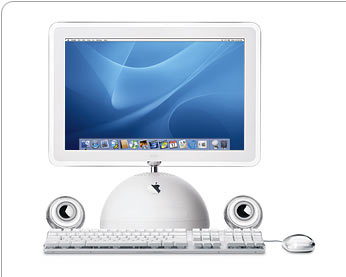
My iMac is celebrating its 10th birthday today. Laura and I purchased the machine on 2/3/4 and were immediately enchanted. Here’s the launch video with Jonny Ives, Phil Schiller, Annie Leibovitz, Seal, Francis Ford Coppola and a great soundtrack:
http://www.youtube.com/watch?v=ZWGuUkYZYIE
That was great, and I loved the commercials, too:
While the iMac is no longer safe to keep attached to the internet (its Power PC CPU limits it to OS X 10.4), the machine still serves in a place of honor in the workout room, powering videos and music for our workouts and serving as a backup DVD burner.
Three Lightning talks at Alphaloft: September 2012 Seacoast Web Dev Meetup
An excellent time as always at the Seacoast Web Developers Meetup held at AlphaLoft in Portsmouth on September 25th.
Josh Cyr presented his initial research on Google Drive. Josh worked with a client to develop a workflow process using events occurring in Google Drive to process documents. The API from Google allows you to iterate through files and folders, change properties. up- and down-load.
Paul Finn presented Vagrant, a shell around virtual machines that allows simple and easy download of pre-made images, spinning up the VM and talking to it (ssh) via Ruby scripts. Paul’s slides are here: http://slid.es/paulfinn/vagrant/fullscreen
Ted Pennings (@thesleepyvegan) talked about cryptography: the basic concepts, aspects of concern, best practices and more! A very informative 20 minutes from a man who’s obviously deeply involved and enthused about the subject. Slides are here: http://prezi.com/kplh0mz6ptjt/cryptography-in-20-fast-minutes/
The Web is about People, if we let it be
I was recently contacted by a company interested in having me consult on their development efforts. As I usually do, I did some background research to figure out who they are and what they do. I was appalled: their web site is one of tens of thousands of generic business sites, pretty but empty. All the buzzterms were there, the generic stock photos of the properly demographically-disparate team meetings, leaning over shiny laptops not wired to anything and pointing to pie charts with no labels. The ‘About Us’ page is filled with slogans and buzz words on how awesome “the team” was, without the single mention of who the team is. The “Contact Us” page is a generic web-based form, with direct links to “sales@example.com” or “info@example.com.” Want a job? Jobs@example.com or hr@example.com.
What is it “About Us” you don’t understand? If you have a link saying “Who We Are,” you had better be ready to name names. Who are these people and what are they hiding? There’s no excuse for a web site like this. Are these people in the witness protection program? Do these people stand behind what they build? There’s no reputation to worry about losing because they never tell you who they are.
You can have the stiff corporate “Who We Are” of black and white pictures of the “Leadership Team” in suits, “Our Advisors” to name-drop your VCs or Directors, or a more playful site of caricatures and off-beat bios. Kudos go to the sites that include your Twitter and Github accounts, and let folks share their passion for mountain biking, marathons or matchbook collecting. But denying there are people behind your web storefront tells me you’re not proud of who you are, you’re uncomfortable putting yourself out there, or you’ve got something to hide.
And that’s the real problem with a “Who We Are” site like this: the publishers are telling us much more about themselves than they intend. In a customer-facing industry where personal service and attention is a key determinant in the success of the project, they’re stating they are not comfortable with that level of contact.
Food for thought.
[OT] Hitler, Apple, Gates and Godwin’s Law
Perhaps there is a corollary (if not, let’s coin Roche’s Rule) to Godwin’s Law — briefly, that any discussion is practically over when it degenerates to metaphors of Naziism — that those who call off Godwin are in turn berated as thread police, censors, infringers on some divine human right to drag threads off topic and, yes, with all the irony involved, Nazis. In this response, I make the foolish mistake of not ignoring the troll bait. I am as guilty of overreacting as the hyperbole used by the original poster to compare Apple with Hitler.
Hitler burned, gassed, tortured, shot seven million Jews in concentration camps. Millions more, of all faiths, died defeating him.
The late Steve Jobs charged premium dollars (and sometimes outrageous fees!) to keep his company out there and competing in the tough markets of computers and software. Apple makes beautiful industrial design, often as impractical as Lamborghinis. They sell DRM-crippled music. They have pushed the envelope of consumer computing, much as Microsoft “innovated” back in the days when they had competition. Apple has sold a billion songs. I admire and respect Jobs, as an empire builder, like Gates and Olsen and Carnegie before him, but I don’t spend the money to buy many of his products, as I’m cheap. I have philosophical differences with Apple, too, but I’d probably buy an iPhone if I hit the lottery. They’re shiny. But, unlike some, I’m not betting my business on them.
Microsoft’s behavior has often been as outrageous as Apples, having been pulled into court a few times, regularly making their large corporate customers buy computers with Windows pre-installed and then pay again and again for licenses to run their OS, access their machines remotely, or run software on them, switching their license fees and terms and dropping products that are near and dear to all of our hearts. I’m not ABM as much as preferring what works best. Windows DirectX is supposed to be a good gaming platform. I hear XBoxes are great for Netflix. I use a Microsoft keyboard and mouse. I happen to think that Microsoft Windows on the desktop is here to stay, even with the incredible drag it puts on businesses with malware problems, poor performance and high cost. I do not, however, think that “the desktop” is here to stay, as a metaphor for people to do their business, and I look forward to Microsoft’s stranglehold on their clients breaking with some Next Big Thing. Off the desktop, I really don’t see Microsoft having contributed that much to the state of computing through their many (many, many) acquisitions. I prefer other brands for networking, server OSes, database servers, programming languages and technologies, not through some blind hatred as much as hard-earned experience. But that’s off-topic…
[The poster who tripped Godwin’s Law…] ‘s post doesn’t have much to do with the topic of the thread, Linux, and is a really offensive comparison to some of us. Hitler and Naziism was one of the most horrific incidents of modern history and to minimize it by comparing it to shiny overpriced phones dehumanizes us all. Gates is not Idi Amin. The cellphone landscape does not resemble Dafur. Let’s get some perspective here, people.
There’s a difference between policing a thread, trying to manage to stay on topic, and censorship. I invoked Godwin’s Law to point out that the thread has likely run its course. You’re free to say what you want. I’m free to point out you’re off-topic.
So, if you want to keep on-topic on the “Linux Desktop Thread” I have some insight and informed opinions on the matter, having run Linux as my desktop for six years now, supporting a half-dozen clients with LAMP boxes in their offices, and developed some dozen or more LAMP applications. If you want to go off-kilter onto iPhones and Google as “liars and thieves,” why don’t you go start your own thread?
(Full disclosure: as I’ve mentioned before [blog.tedroche.com/disclaimers], I purchased a tiny bit of Apple stock a long time ago. It’s now worth a lot more than I paid for it, through no fault nor skill of mine. I also own tiny bits of Red Hat, HP and Microsoft. They’re still tiny. I don’t think this influences my opinion all that much, but I let my possible biases be known.)
NH Ruby September 2011: Backbone.js Jason Morrison
Twelve folks attended the September meeting of the New Hampshire Ruby Rails Group. Due to some logistical issues, we moved the meeting from NH-ICC to AlphaLoft, thanks to AlphaLoft member Nick Plante. Jason Morrison of thoughtbot was the featured speaker, talking about backbone.js.
Organizer Brian Turnbull got the meeting started with brief introductions.
Clients want the improved client-side experience of rich-client apps within the browser.
But which framework? Different patterns: MVC2 is what we’re used to seeing in Ruby/Rails. MVC and MVVM (Model-View-View-Model or Presenter).
Choice fatigue (http://www.nytimes.com/2011/08/21/magazine/do-you-suffer-from-decision-fatigue.html) : there seem to be more JavaScript frameworks than JS developers.
- Capuccino – PowerPoint in the browsers, 270North
- SproutCore (1,x,m 2.z) ricu Ui widget framework,.0 from the ground up rewrite, less widgets
- Knockout.js: useds the HTML5 Data- elements
- Batman.js – from Shopify, ActiveMerchant, using Node.js server-side component
- JavaScriptMVC – mature, uses jQuery, filterable grids, lots of power
- Spine.js – CoffeeScript, asynchronous front end, does full validation on client-side
- Backbone.js – tonight’s featured framework, well-documented (in Doc-O)
- Angular, Coherent, PureMVC-js, AFrameJS, TrimPath Junction,
Moving parts:
- History
- Router
- View
- Model
- Collection
- Sync
- Underscore
- $
Jason wowed the crowd with an excellent demo of an app under development and spoke eloquently of the power, and the dangers, of deploying MVC (or MV-something-else) into the client. His slides contained a great many good references. My laptop gave out at this point, so I didn’t take additional notes, but you can find his slides at http://jayunit.net/backbone-js-on-rails-talk and source for the slides at https://github.com/jasonm/backbone-js-on-rails-talk/blob/gh-pages/slides/index.md
One of the little things that got the crowd all excited was the line numbering on Jason’s Vim session: the current line was numbered 0, and line numbers incremented both up and down the screen. “Oh, that” Jason said. ‘set rnu’ is the command (see :help rnu within vim for details.)
Michael Tomer talked a little bit about his project, rocket.io, which is an interesting project trying to solve similar problems: “real-time” (no http lag) page updating, background sync between client and remote server. You can find his work at [updated link] https://github.com/actsasbuffoon/rocket-io
Thanks to Jason for an awesome presentation, to Nick Plante for hosting us at AlphaLoft, to Brian Turnbull for organizing the meeting, announcements and logistics, and to all the attendees for their participation.
NH Ruby meeting, 15 August 2011: Brian Turnbull, Rails 3
Brian Turnbull ran and presented to the August meeting of the New Hampshire Ruby Users Group meeting, held at the New Hampshire Innovation Commercialization Center. Over a dozen attendees turned out for the meeting, despite the inclement weather.
Brian presented an introduction to Rails 3 using a small application he had built for work. He gave us an overview of the problem to be solved, skipping the irrelevant details, and explained how that fit into basic MVC concepts. We touched on the idea of design patterns. We examined or discussed many facets of Rails development, including rake tasks, migrations, fat models – thin controllers, using HAML for view templating, creating your own custom validators, deployment using Capistrano and more.
Brian mentioned several useful resources, such as Google, the Rails Guides, the API reference, and more. He mentioned that he’d read Metaprogramming Ruby [Updated link] and thought that it changed his perspective on using Ruby.
As always, there was time for folks to get their questions answered. There were questions on stack dumps in rake, unobtrusive JavaScript, new features of Rails 3, Capistrano deploys to non-git-clients, and more.
Thanks to Brian for a information-packed presentation, and to all for attending and participating. Brian is always looking for ideas for future meetings and volunteer help in organizing.
Notes from NH Ruby/Rails, 17-Jan-2011: Brian Turnbull, OmniAuth, Nick Plante, Mirah
Seven members attended the New Hampshire Ruby / Rails group meeting held on 17-January-2011 at the New Hampshire Innovation Commercialization Center (NH-ICC). We had two presentations: Brian Turnbull talked about OmniAuth and Nick Plante showed a project he’s doing with Mirah on the Android platform.
Brian Turnbull is an engineer working for ARRIS and injects Ruby into his build tools whenever he gets the chance. A recent project required authentication against multiple providers and he did some research on OmniAuth. Brian presented a slideshow explaining the basic concepts of authentication and how they’re implemented in OmniAuth. Apparently, OmniAuth was the authentication method of choice during the most recent RailsRumble, used by most of the contestants. Brian outlined the process needed for working with an existing provider and demonstrated it with clear and simple code. He followed that up by showing how to build your own custom provider and authentication strategy. Brian’s sample code can be found on his github account.
Nick Plante has been working on an Android rich client app as part of a web-based social application that’s soon to launch. Nick told us that working on Java for Android has reinforced his love of Ruby. There’s not yet a good port of Ruby to the Android platform, but he has been impressed with the Mirah language, a hybrid solution that compiles to bytecode and runs natively on the JVM. He has developed a Ruby generator called protoform to construct the skeletons of a Mirah app. He gave us a tour of the components and built a simple “Hello, World” app, deployed and ran it on his Android VM.
Thanks to Brian for organizing the meeting and for the OmniAuth presentation, to Nick for talking about his Mirah project and to the NH-ICC for providing the fine facilities.
Notes from CentraLUG, 6-Dec-2010: David Berube, MySQL Operations
Six people attended the December 2010 meeting of the Central New Hampshire Linux Group, held at the NHTI‘s Library from 7 to 9 PM. David Berube was the featured speaker, talking about his experience with large scale high-performance MySQL applications.
David is an independent software developer and consultant. One of his larger projects over the past couple of years has been an application for scheduling actors for auditions. This involves agents and projects, auditions, roles, videos and a number of other entities in a complex and fast-moving application. He’s used Ruby on Rails, PHP, MySQL, a NOSQL database, Amazon S3, A rack of Mac Minis, BSD, Linux, and a number of other elements. He had some insightful things to say about the development process, managing a client project, handling difficult requirements, scaling up million-row databases for subsecond response times and more. It was a meeting well worth attending.
There were a lot of useful tools and reference sites mentioned, and I was only able to take note of a few: Useful Ruby add-ons: New Relic, Query Reviewer, Percona Operations Day, Cacti for data aggregation. An In-depth discussion of NoSQL (“Not Only SQL”) Databases: what are they, what are they good for, what are the liabilities? A good discussion of the trade-offs of using NoSQL, reference to the NHRuby presentation on Redis a few months ago, and more.
Thanks to David for an informative presentation, to the attendees for a dynamic interactive session, and to the NHTI Library for the facilities. Future meetings at the Concord location have been suspended, we encourage our regulars to attend the Manchester ManchLUG meetings. If you haven’t already, consider subscribing to the announcement list so you’ll know when there’s an upcoming meeting. (Subscribers to the discussion list will automatically receive the announcements, too.)